
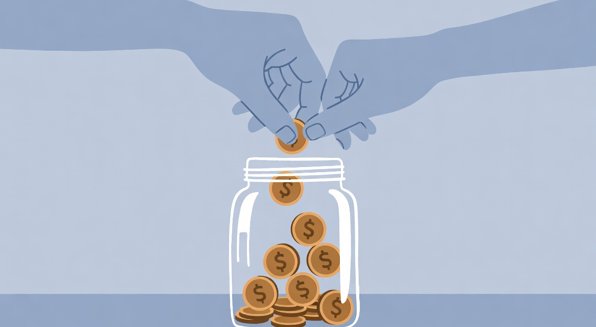
Dollar-cost averaging (DCA) is the practice of investing a fixed dollar amount at regular intervals — monthly or quarterly, for example — regardless of whether the market is rising or falling.
When prices are higher, your fixed contribution buys fewer shares. When prices are lower, the same contribution buys more shares. Over time this can produce a lower average cost per share than trying to time a single large purchase.
A Simple Illustration
The chart below shows a hypothetical market path and the number of shares accumulated by investing the same amount each period. Notice how more shares are purchased during the lower-price periods.
Why Investors Use It
- It removes the pressure of trying to “buy the bottom.”
- It builds the habit of consistent investing.
- It works naturally with automatic contributions from a paycheck or bank account.
- It can reduce the regret that often follows a poorly timed lump-sum investment.
Important Caveats
Dollar-cost averaging does not eliminate risk or guarantee a profit. In a steadily rising market, investing a lump sum earlier would have produced a higher ending value. DCA is simply a practical method for putting money to work over time when cash is received periodically or when an investor prefers a more gradual approach.
It is also not a substitute for a sensible overall allocation or a written investment plan. The real power comes from combining consistent contributions with a long time horizon and the discipline to keep going when headlines turn negative.
This article is for educational purposes only and does not constitute investment advice. Past performance is not indicative of future results. Hypothetical illustrations do not reflect actual investment results.